

Superstition remains deeply rooted across Africa, largely because of how society misunderstands the psychological nature of dreams, visions, and premonitions. While modern education and technology are rising, the human mind’s natural way of processing information is still widely misinterpreted. Instead of viewing dreams as symbolic messages from the subconscious, many people interpret these mental images literally. This literal interpretation bridges the gap between psychological phenomena and superstitious beliefs, keeping age-old fears alive.
To understand why this persists, we must look at how the human mind functions. The subconscious mind does not communicate in plain language; it communicates in symbols, metaphors, and images. When a person experiences a vivid dream or a powerful premonition, the mind pulls from a library of familiar cultural, religious, and personal images to project a message. It uses what the individual already knows to highlight internal anxieties, suppressed desires, or patterns the conscious mind has overlooked.
READ ALSO: HOW CRITICAL THINKING LIBERATED HUMANITY
For instance, if someone dreams of being chased by a wild animal or a menacing figure, the mind is often trying to signal a state of high stress, avoidable danger, or an unresolved conflict in their waking life. It is an internal alarm system urging the individual to look inward and address their emotional or mental state. However, in many African contexts, this symbolic imagery is immediately taken literally. The menacing figure in the dream is rarely seen as a metaphor for stress; instead, it is identified as a literal spiritual enemy, a witch, or a projection of family malice.
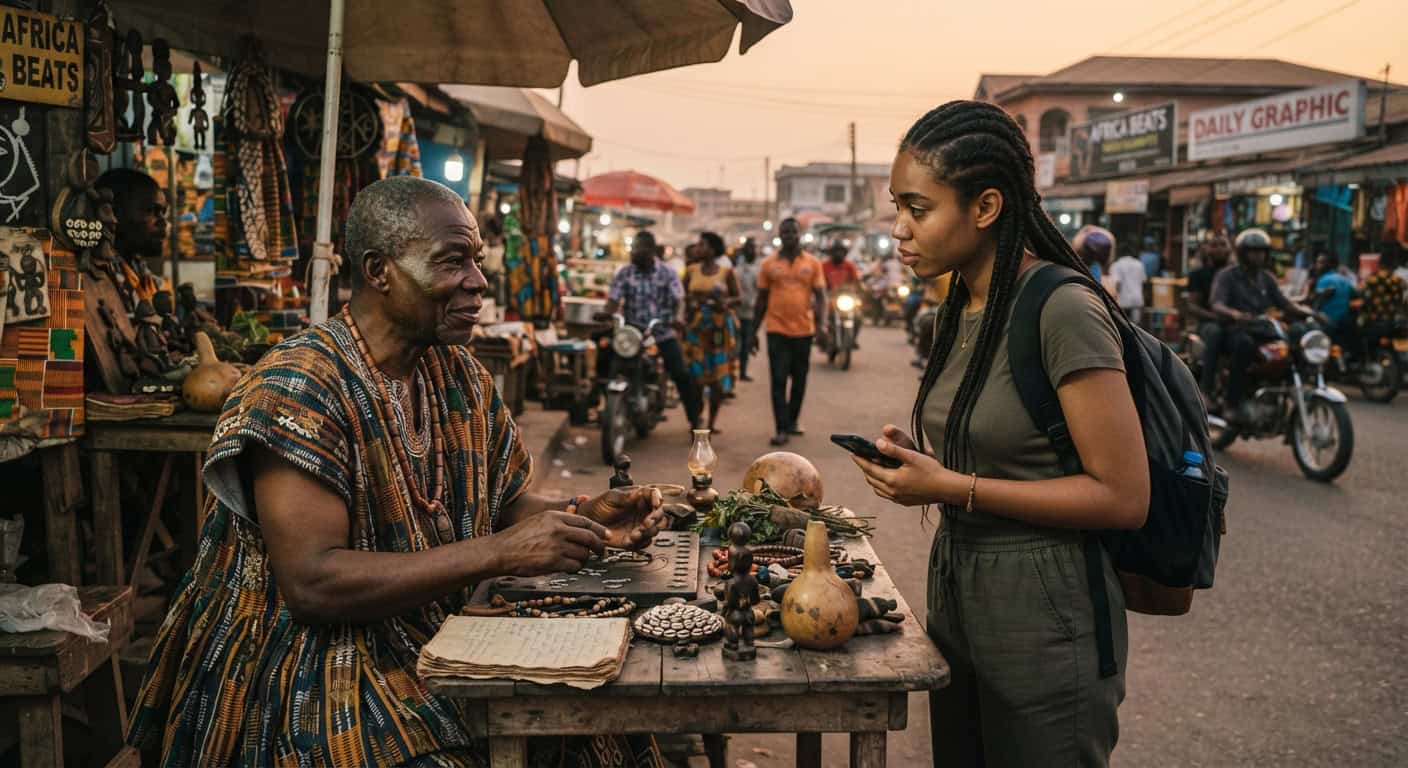
This literal reading of the mind’s internal cinema directly feeds superstition. When people fail to decode the symbolic language of their own minds, they look outward for answers. They attribute internal psychological tension to external spiritual forces. This shift in perspective creates a reliance on spiritual intermediaries, such as native doctors, prophets, or religious leaders, to break imaginary curses or fight unseen battles. Consequently, the actual issue whether it is stress, anxiety, trauma, or a practical problem that needs solving goes unaddressed because the individual is focused on fighting a literal interpretation of a symbolic dream.
Furthermore, cultural conditioning reinforces this cycle. From childhood, many individuals are taught that dreams are direct, supernatural portals to the spiritual realm. When the mind generates an image to help an individual work through an issue, the existing cultural framework immediately categorizes it as an omen. Because this framework is so dominant, alternative explanations such as psychological processing or emotional stress are rarely considered. The literal interpretation becomes the default reality, passing down from generation to generation and solidifying superstition as a valid way to navigate life.
Ultimately, superstition persists because it offers an immediate, albeit flawed, explanation for the complex workings of the subconscious mind. Until there is a widespread shift toward understanding dreams and premonitions as psychological tools rather than literal spiritual events, the reliance on superstition will remain. Recognizing that the mind uses familiar pictures to guide our inner growth rather than to warn us of literal witchcraft is the first step toward breaking the cycle of superstition in modern Africa.